Every blog has two maps: the topics it has covered, and the topics its audience actually needs. The distance between those maps is where growth lives, and content gap analysis is the discipline of measuring that distance deliberately instead of discovering it a post at a time over three years.
This guide builds the practice from the ground up: the two gap types that behave differently, the tool-assisted and manual ways to find them, the prioritization method that prevents analysis paralysis, and the workflow that converts findings into published pages. By the end, the phrase steal the topics competitors missed will feel less like a headline and more like a Tuesday task.
Quick answer:Three Gaps, Two You Can Measure
Keyword gaps are the measurable flavor. A competitor outranks you for a term searchers use, you have no page targeting it, and the report that reveals this is a standard feature of every serious research tool: enter your domain, enter competitors, receive the terms they hold that you lack. The list is factual, which makes it seductive, and also incomplete, because it says nothing about whether those pages deserve their rankings. Some of the terms will be structural to a competitor's business model rather than their content quality, some will be leftovers ranking on domain strength alone, and telling the difference is the analyst's actual job, which the rest of this guide equips.
helpful content standards low-competition keyword guideThe two gap types combine into a single weekly habit for working sites. Once a week, take one competitor keyword gap and one quality gap, and pair them: the keyword tells you demand exists, the quality audit tells you the angle is open, and together they form a post brief with the research already half done. Sites that run this rhythm never face blank calendar weeks, because the pipeline of validated ideas stays stocked, and the annual planning session becomes confirmation rather than archaeology.
The Tool Pass and the Manual Pass
SEMrush's domain analytics- List three to five competitors that rank for the searches your audience makes.
- Run a keyword gap report with your domain against theirs.
- Filter for terms with real volume and difficulty you can genuinely attempt.
- Mark intent and map each term to a content type your site can produce.
- Spot-check the top five results for each shortlisted term to confirm the gap is real.
The manual pass catches what reports miss. Read the competitor's category structure and compare it against your archive page by page; browse their most-linked pages if tools expose them; and read their comment sections and social replies, where audiences say what the content did not answer. Twenty minutes of this turns up question-shaped gaps no keyword tool surfaces, because questions precede keywords, and the questions audiences type into comment boxes are often months ahead of what they type into search boxes. Publishers who mine those signals publish answers before demand registers, which is the cheapest first-mover advantage content marketing offers.
The SERP audit deserves its own discipline because it is where judgment lives. For each shortlisted term, open the top five results and grade them on freshness, depth, first-hand signals, and whether the searcher's real question gets answered or merely addressed. Score each weakness you find, because a SERP with three thin listicles and a forum thread is a different proposition from one defended by two definitive guides, whatever the difficulty metric claims. Fifteen minutes per term, five terms per session, and the audit becomes the most valuable part of the whole analysis.
low-competition keywords guidePrioritization and the Calendar Handoff
Prioritization prevents the graveyard of findings documents. Score every gap on demand, difficulty, and value, one to five each, and multiply or just eyeball the sum. Demand without difficulty is the quick win list; value without demand is the strategic bet list worth one slot per month; high demand with brutal difficulty is the list you revisit when your authority grows. The scoring matters less than the sorting into those three actions, because unsorted findings all look equally urgent, and equally urgent means nothing gets published. A shared spreadsheet with the three columns, updated each quarter, is the entire apparatus.
| Gap type | Signal | Typical action |
|---|---|---|
| Keyword gap, low difficulty | They rank, you absent, weak SERP | Publish this month |
| Quality gap | Outdated or thin incumbents | Build the definitive version |
| Question gap | Comments and PAA unanswered | FAQ-rich post or section |
| Authority gap | High demand, brutal SERP | Schedule for later, build links first |
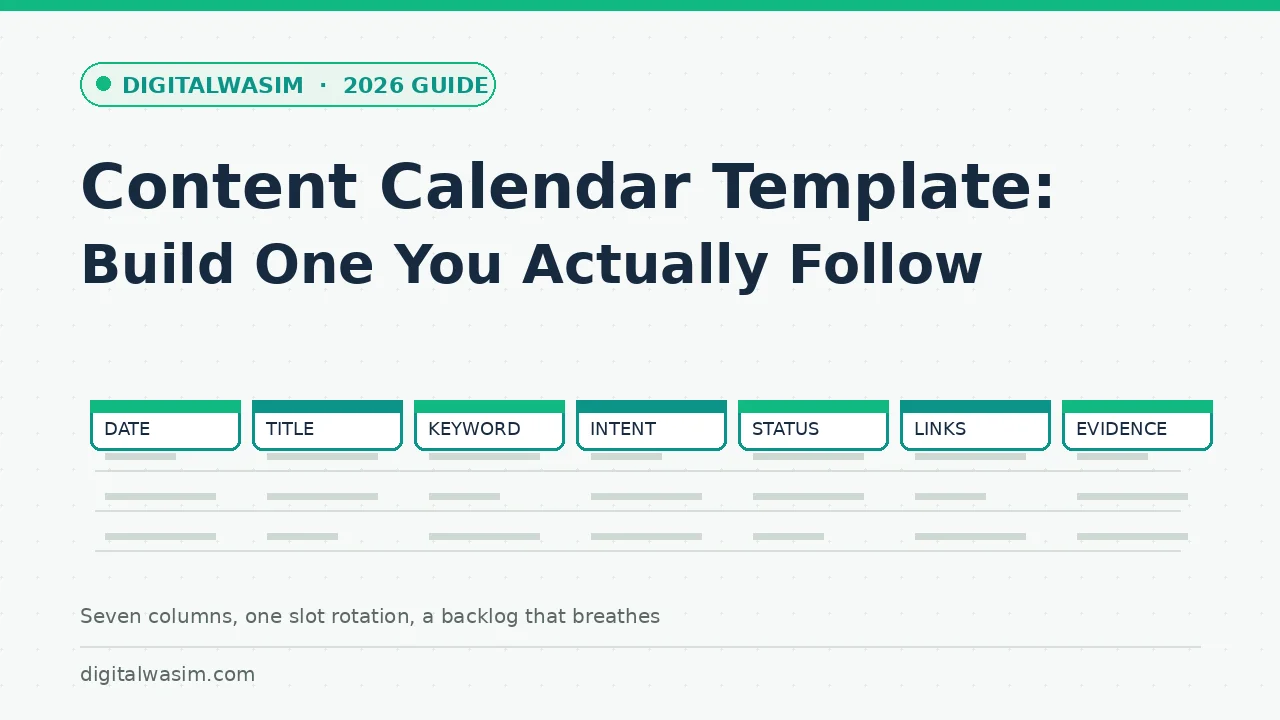
A four-week example shows the handoff working. Week one: the gap report surfaces six keyword gaps and the audit flags two quality gaps; scoring keeps four targets. Week two: the easiest target publishes, interlinked from two existing posts. Week three: the quality-gap definitive version publishes against a thin incumbent. Week four: the reader-signal post, drawn from an inbox question, fills a niche no report found. Four posts, zero debates, one method: that is the entire promise of gap analysis delivered on schedule, and the following quarter starts with two of those four posts already feeding new gap opportunities through their own analytic footprints.
Small sites have an asymmetric play the big competitors cannot copy: specificity. A giant's keyword footprint includes everything, which means their content averages toward the generic, and every generic corner is a quality gap by definition. Your site can publish the deep, specific, experience-heavy version of a topic a generalist outlet covered in eight hundred words, and the SERP audit will show exactly that opening. This is why gap analysis favors focused publishers over time: the map of weaknesses grows faster than the map of strengths when your rival covers a whole industry, and the focused site only needs the corner of the map where its authority already lives.
Failure Modes and the Healthier Frame
Common failure modes deserve naming. The report dump: exporting hundreds of terms without filtering, then never opening the file again. The mimicry trap: copying a competitor's exact angles, which positions you as the sequel forever instead of the improvement. The keyword myopia: chasing search demand while ignoring questions your actual readers ask in email and comments. Each fails the same test: did the analysis end in something a reader needed?
Tooling stays simple because the method carries the value. A research subscription with gap reports covers the keyword side, a spreadsheet covers scoring, and a browser covers the SERP audits; nothing else is required, and publishers who have already subscribed to the suites reviewed on this site already own the tooling. What changes over time is judgment: the first quarter's scores will be rough, the second quarter's better, and by the third the difficulty estimates, quality reads, and value calls start agreeing with outcomes, which is the quiet moment the practice turns from analysis into instinct. Budget one hour per quarter for the full pass and thirty minutes monthly for the light check, and the cadence holds without becoming a chore.
step-by-step blog post guide SEO blog writing guideThe verdict fits in two sentences. Content gap analysis is a quarterly appointment with the difference between what you have published and what your audience needs, run with a tool for scale and a browser for truth. Steal the gaps, schedule them, write them better than anyone bothered to, and the competitors' blind spots become your growth curve.