Google AdSense is the first monetization method most bloggers try. It is easy to set up and requires minimal effort. But relying on AdSense alone is like building a business with only one customer. If Google changes its policies, cuts your RPM, or disables your account, your income drops to zero overnight. I learned this the hard way when one of my sites got a policy violation and lost 80% of its revenue in a single day.
That experience forced me to diversify. Over the next year, I built multiple income streams that now generate far more than AdSense ever did. The best part is that most of these strategies work alongside AdSense, so you do not have to choose. You can layer them.
If you are still working on getting AdSense approval, these strategies can start generating income while you wait. And if you already have AdSense, these methods will supplement and eventually surpass your ad revenue.

1. Affiliate Marketing
Affiliate marketing is the most reliable way to monetize a blog without ads. You recommend products or services and earn a commission when someone purchases through your link. The commission ranges from 5% to 50% depending on the program. Some software affiliate programs pay $50 to $200 per referral.
The reason affiliate marketing works so well for blogs is trust. When you write a detailed, helpful article about a topic, readers trust your recommendations. If you recommend a tool that genuinely helps them, they are happy to sign up through your link. It costs them nothing extra.
How to get started with affiliate marketing:
- Choose relevant products — Only recommend products you have used or thoroughly researched. Your readers can tell when a recommendation is genuine versus when you are just chasing commissions
- Join affiliate programs — Start with Amazon Associates for physical products and individual software programs for digital tools
- Write comparison posts — Articles like "Tool A vs Tool B" are perfect for affiliate links because the reader is already in a buying mindset
- Add product boxes — Include dedicated recommendation boxes within your content with clear calls to action
- Disclose your affiliate relationships — Always be transparent. It builds trust and is legally required in most countries
I earn more from affiliate marketing than from all other monetization methods combined. The key is to recommend products that solve real problems for your readers, not just any product with a high commission.
2. Sell Digital Products
Digital products are one of the highest-margin businesses you can run. You create the product once and sell it unlimited times. There is no inventory, no shipping, and no manufacturing cost. A well-made ebook or template can generate revenue for years.
Types of digital products that work for bloggers:
- Ebooks and guides — In-depth guides on your area of expertise. A 50-page ebook on a specific topic can sell for $15 to $49
- Templates — Blog post templates, SEO checklists, editorial calendars, and planning worksheets. These sell for $5 to $25
- Courses — Structured video or text-based courses that teach a specific skill. Premium courses can sell for $49 to $299
- Printables — Planners, worksheets, and checklists that readers can download and print
- Swipe files — Ready-to-use email templates, social media captions, or content calendars
The biggest mistake bloggers make with digital products is trying to sell something generic. Your product needs to solve a specific problem that your audience already has. Look at the questions your readers ask in comments and emails. Those questions are product ideas.
The best digital product is the one your readers are already asking for. You just need to package your expertise into a downloadable format.
3. Sponsored Blog Posts
Brands pay bloggers to write about their products or services. A sponsored post is essentially an advertisement wrapped in editorial content. The difference from a regular ad is that it feels native to your blog and provides value to your readers.
Sponsored post rates vary widely. A new blog with modest traffic might charge $50 to $150 per post. Established blogs with strong domain authority and engaged audiences can charge $500 to $5,000 per post. Some top-tier bloggers charge even more.
How to attract sponsored post opportunities:
- Create a "Work With Me" or "Advertise" page on your blog with your traffic stats and contact information
- Join influencer marketing platforms like BlogMeetsBrand, Cooperatize, or GetBlogged
- Reach out directly to brands whose products align with your content
- Build your email list so you can show brands your subscriber count alongside your traffic numbers
- Publish high-quality content consistently so brands can see the standard of your work
The key to successful sponsored content is maintaining editorial integrity. Only accept sponsorships from brands you would genuinely recommend. If a product is low quality, no amount of money is worth the trust you lose with your readers.
4. Email Marketing and Newsletter Sponsorships
Your email list is your most valuable asset as a blogger. Social media followers can disappear overnight if a platform changes its algorithm. But your email list is yours. You own it, you control it, and you can monetize it directly.
There are two ways to monetize through email. First, you can promote your own products and affiliate links to your subscribers. Email promotions consistently outperform social media promotions because you are reaching people who already trust you. I covered how to build an email list that actually converts, and the same principles apply here.
Second, you can sell newsletter sponsorships. Brands pay you to include a brief mention or dedicated section about their product in your regular email. Rates are typically calculated per thousand subscribers, known as CPM. A blog with 5,000 subscribers might charge $25 to $75 per newsletter sponsorship.
Email monetization best practices:
- Send value-first emails. Your subscribers should look forward to opening your messages
- Keep a consistent sending schedule so subscribers know when to expect your emails
- Limit promotional emails to no more than one in every three or four sends
- Track open rates and click rates to show sponsors the engagement you deliver
- Always disclose sponsored content in your emails
5. Coaching and Consulting
If you have expertise that helps people solve problems, you can charge for one-on-one or group consulting. This is the fastest path from zero to significant income because you are selling your time and knowledge directly.
Consulting rates depend on your niche and experience. A beginner SEO consultant might charge $50 to $100 per hour. An experienced consultant in a specialized niche can charge $200 to $500 per hour. Some consultants charge flat project fees of $1,000 to $10,000 for a complete audit or strategy.
How to start consulting through your blog:
- Demonstrate expertise — Publish detailed, actionable content that proves you know what you are talking about
- Offer a free initial consultation — Let potential clients experience your value before they commit financially
- Create a services page — List what you offer, your rates, and how to book a session
- Collect testimonials — Ask satisfied clients for written testimonials you can display on your site
- Start small — Offer 30-minute sessions at a lower rate to build your client base and testimonials

The beauty of consulting is that it requires zero upfront investment. Your knowledge is the product. And every consulting session gives you insights into the real problems your audience faces, which gives you more content ideas for your blog.
6. Sell Physical Products or Merchandise
If your blog has a loyal audience, selling branded merchandise can be a meaningful revenue stream. T-shirts, mugs, stickers, and tote bags with your blog logo or popular catchphrases can generate income while also building brand awareness.
The key is to use print-on-demand services so you do not need to hold inventory. Services like Printful, Printify, and Redbubble handle printing, shipping, and customer service. You just upload designs and promote them.
Physical product ideas for bloggers:
- Branded t-shirts and hoodies with your blog name or tagline
- Mugs and water bottles with motivational quotes from your content
- Sticker packs related to your niche
- Journals and planners that complement your content
- Niche-specific tools or accessories your audience would find useful
I have seen bloggers who sell just 20 to 30 t-shirts per month make an extra $300 to $500 with minimal effort. The margin is typically 30 to 50% per item after production costs.
7. Membership or Subscription Model
A membership site gives readers access to exclusive content, tools, or community in exchange for a recurring monthly fee. This model creates predictable, recurring revenue that grows as your membership base expands.
Membership models work best when you offer something that is not available anywhere else for free. This could be premium tutorials, downloadable resources, a private community forum, weekly Q&A sessions, or early access to your content.
Pricing your membership:
- Starter tier at $5 to $10 per month for basic access and community
- Pro tier at $15 to $30 per month for premium content, downloads, and group calls
- VIP tier at $50 to $100 per month for one-on-one access, custom advice, or personal audits
The platform you choose matters. Tools like MemberPress, Restrict Content Pro, and Patreon make it easy to gate content and manage subscriptions. Even a small membership of 100 members paying $10 per month generates $1,000 in recurring revenue.
8. Accept Donations and Tips
Some readers want to support your work but do not need any product or service. Giving them an easy way to donate or tip is a simple monetization strategy that works surprisingly well for blogs with loyal, engaged audiences.
Platforms like Buy Me a Coffee, Ko-fi, and PayPal make it easy to add a donation button to your site. Some bloggers earn $200 to $1,000 per month purely from reader donations.
How to encourage donations without being pushy:
- Add a small "Support My Work" section at the end of your articles
- Mention that donations help you keep the blog free and ad-free
- Offer a small perk for donors, like early access to new posts or a shoutout in your newsletter
- Keep the suggested amount reasonable. $3 to $5 is a sweet spot for one-time tips
- Never guilt-trip readers into donating
9. Freelance Writing Opportunities Through Your Blog
Your blog is a portfolio. When a potential client or editor visits your blog, they see your writing style, your expertise, and your ability to engage readers. This makes your blog the most powerful tool for landing freelance writing gigs.
Many successful freelance writers built their client base entirely through their blogs. A well-maintained blog in a specific niche positions you as an expert. Editors at publications and brands actively search for subject-matter experts to write for them.
How to attract freelance opportunities:
- Write comprehensive, well-researched articles that showcase your expertise
- Include an "About" page with your writing experience and areas of specialization
- Link to your best work in your social media profiles
- Network with other writers and editors on platforms like LinkedIn and Twitter
- Pitch publications directly with specific story ideas tailored to their audience
Freelance writing rates range from $50 to $500+ per article depending on the publication and your experience. A single retainer client paying $1,000 per month for four articles can become a stable income stream that supports your blogging habit.
10. Create a Job Board or Directory
If your blog targets a specific industry or profession, a job board can be a significant revenue source. Companies pay to post job listings, and job seekers visit your site to find opportunities. It is a win for everyone involved.
Job board platforms like WP Job Board, Simple Job Board, or even a custom solution can be set up in a few hours. You can charge companies $20 to $200 per listing depending on your traffic and the niche. A niche job board with just 10 paid listings per month at $50 each generates $500 in mostly passive income.
Job board success factors:
- Your blog needs targeted traffic in a specific industry
- Start by curating free job listings to build the habit of people checking your board
- Once you have regular visitors, introduce paid listings for employers
- Promote your job board in your newsletter and social media channels
- Keep the board updated and remove expired listings to maintain quality
How to Choose the Right Strategies for Your Blog
You do not need all ten strategies. Trying to do everything at once will spread you too thin. Instead, pick two or three strategies that align with your niche, your skills, and your audience.
If you write about software and tools — Focus on affiliate marketing and sponsored posts. These convert best in tech niches where readers are actively looking for product recommendations.
If you write about personal finance or business — Digital products and consulting are high-margin options. Readers in these niches are willing to pay for expertise.
If you write about lifestyle or hobbies — Physical merchandise, memberships, and donations work well. These audiences are more community-oriented and likely to support creators they like.
The most successful bloggers I know use three to four income streams. When one has a slow month, the others make up for it. Diversification is not optional. It is survival.
The Income Diversification Framework
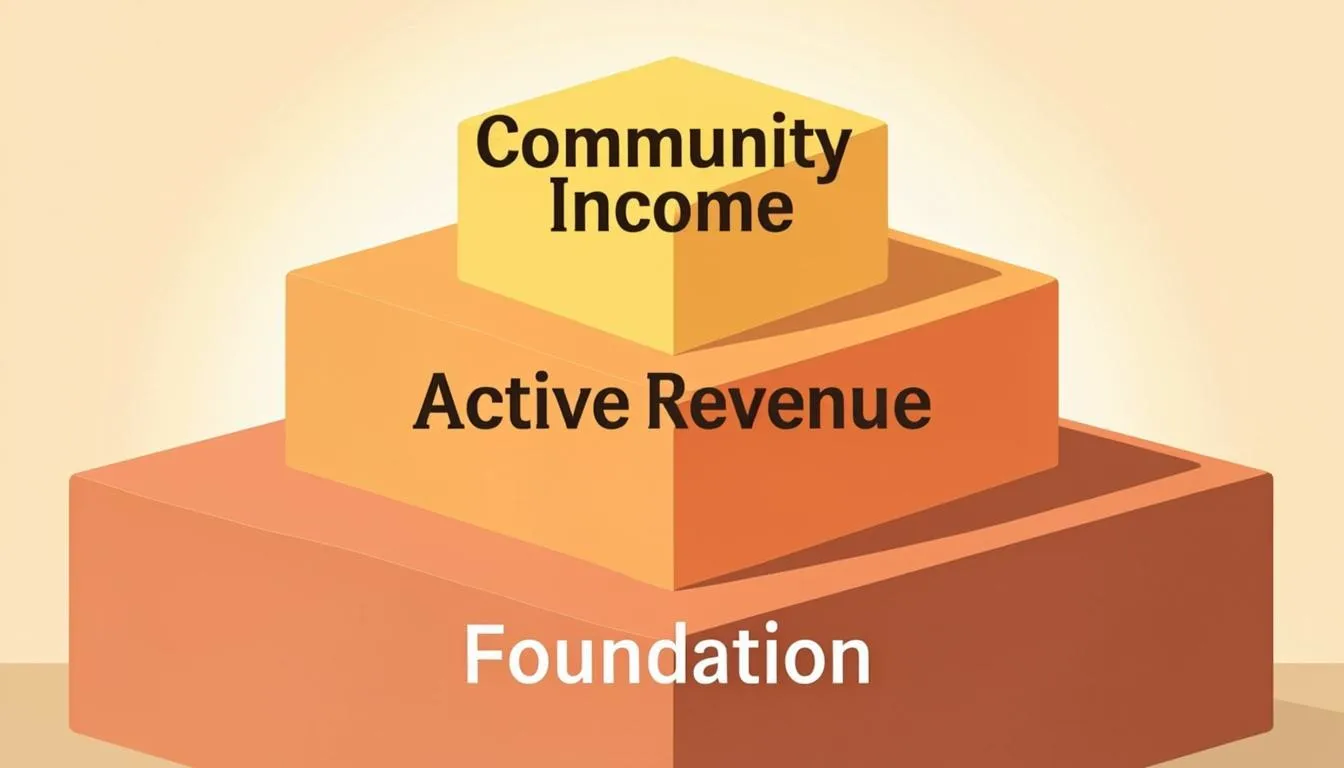
Here is how I structure income on my blogs. Think of it as layers.
Layer 1: Passive Foundation — Affiliate links within existing content and digital products. These require upfront work but generate income continuously.
Layer 2: Active Revenue — Sponsored posts, freelance writing, and consulting. These require ongoing effort but pay well per hour of work.
Layer 3: Community Income — Memberships, donations, and job boards. These depend on audience loyalty and grow over time.
Start with Layer 1 because it builds on the content you are already creating. Once your affiliate income reaches $100 to $200 per month, add Layer 2. When you have a loyal audience of 1,000+ regular readers, explore Layer 3.
This layered approach means you are never dependent on a single income source. If AdSense RPMs drop, your affiliate income and digital product sales keep you profitable. If affiliate programs change their commissions, your sponsored content and consulting fill the gap.
The bloggers who make real money are not the ones who found a single magic strategy. They are the ones who built multiple income streams over time, tested what worked for their specific audience, and doubled down on the winners. That is exactly what I want you to do with these ten strategies. Start with one, make it work, then add another. Within six months, you can have three or four income streams generating real money from your blog.