Every blog post you publish is an opportunity to rank on Google. But most bloggers hit publish without running through a proper on-page SEO checklist. They wonder why their content sits on page three while competitors with weaker content outrank them. The difference is almost always on-page optimization.
I have been publishing content for over eight years now. When I started, I used to write articles and publish them immediately without any optimization. The results were predictable: zero traffic. Once I started following a structured on-page SEO checklist for every single post, my traffic changed dramatically. Posts that would have gotten 50 visits started getting 500, and some crossed 5,000 visits per month.
This checklist covers every on-page SEO element that matters in 2026. Not theory. These are the exact steps I follow before publishing any blog post on my sites.
Why On-Page SEO Matters More Than You Think
On-page SEO refers to every optimization you make directly on your webpage. This includes your title, headings, content structure, internal links, images, and URL. Unlike off-page SEO which depends on other websites linking to you, on-page SEO is completely within your control.
Google uses on-page signals to understand what your page is about and how relevant it is to a searcher's query. If your on-page SEO is weak, even great content will struggle to rank. I learned this the hard way when I was trying to start a profitable niche website and couldn't get any traction until I fixed the basics.
The truth is simple: on-page SEO is the foundation. Without it, link building and content promotion are like pouring water into a leaky bucket.
1. Keyword Research Before Writing
Before you write a single word, you need to know which keyword you are targeting. I spend 15 to 20 minutes on keyword research before every post. This single step determines whether your article has a chance to rank.
What to check:
- Search volume: Is anyone actually searching for this topic?
- Keyword difficulty: Can a site at your level realistically compete?
- Search intent: Are searchers looking for information, a product, or something else?
- Related keywords: What other terms does Google show in the "People Also Ask" section?
I use free SEO tools to get this data quickly. The goal is to find a primary keyword with decent search volume and low competition, plus three to five secondary keywords to include naturally in the content.
How I Pick Keywords
I look for keywords that match three criteria. First, the search intent should be informational because that is what blog posts do best. Second, the competition should be low enough that a newish site can rank. Third, there should be related questions I can answer in the article to capture long-tail traffic.
The process of finding these keywords is straightforward once you know what to look for. I covered my exact method for finding low competition keywords in a separate guide on how to find low competition keywords that drive real traffic.

2. Title Tag Optimization
Your title tag is the single most important on-page SEO element. It tells Google and searchers what your page is about. A well-optimized title can be the difference between position three and position one.
Rules I follow for every title:
- Include the primary keyword within the first five words
- Keep the title between 50 and 60 characters to avoid truncation
- Make it compelling for humans, not just Google
- Include a power word like "complete," "proven," or "essential" when it fits naturally
- Never stuff keywords. One primary keyword per title is enough
Title Examples
Here is a comparison that shows the difference between a weak and strong title for the same topic.
| Weak Title | Strong Title | Why It Works |
|---|---|---|
| SEO Tips for Blogs | On-Page SEO Checklist for Blog Posts | Specific, includes primary keyword early |
| How to Do SEO | Complete On-Page SEO Guide for Bloggers | Power word + clear scope + target audience |
| Write Better Blog Posts | How to Optimize Blog Posts for Google Rankings | Benefit-driven + keyword in first five words |
The strong titles tell both Google and the reader exactly what to expect. They are specific, they include the keyword early, and they create a reason to click.
3. URL Slug Optimization
Your URL slug appears in search results and browser tabs. Google uses it as a lightweight ranking signal. A clean URL helps both users and search engines understand the page topic.
URL best practices:
- Use the primary keyword in the slug
- Keep it short, ideally three to five words
- Separate words with hyphens, not underscores
- Remove stop words like "a," "the," "and," "for"
- Never change the URL after publishing
- Avoid years and dates in the URL
Good URL: /blog/on-page-seo-checklist-blog-posts
Bad URL: /blog/the-ultimate-guide-to-on-page-seo-optimization-for-blogs-in-2026
The good URL is short, keyword-rich, and will never need updating. The bad URL is stuffed, too long, and contains a year that will make it outdated.
4. Meta Description That Gets Clicks
Your meta description does not directly impact rankings, but it heavily impacts click-through rate. A higher click-through rate sends positive signals to Google, which can indirectly improve your rankings over time.
I treat meta descriptions as a mini advertisement for my content. Writing click-worthy meta descriptions is a skill that improves with practice.
My meta description formula:
- Start with the primary keyword
- State the main benefit or what the reader will learn
- Include a secondary keyword naturally
- Add a subtle reason to click ("proven," "step-by-step," "complete")
- Keep it between 140 and 160 characters
5. Heading Structure (H1, H2, H3)
Your headings create the content hierarchy that Google uses to understand your page structure. A proper heading structure makes your content scannable for readers and easier for Google to parse.
The heading rules I follow:
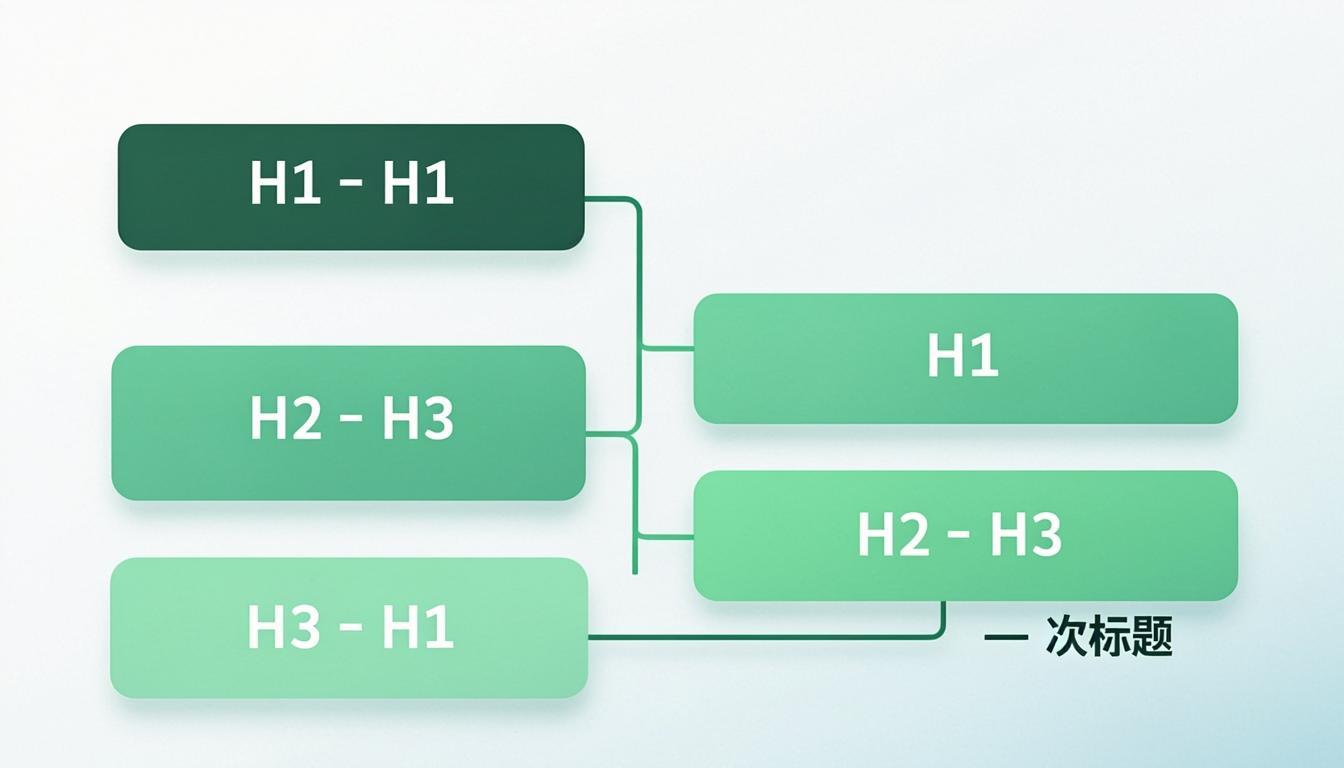
- Use exactly one H1 tag per page. Your title is the H1.
- Use H2 tags for main sections. Include secondary keywords in some H2s.
- Use H3 tags for subsections within H2 sections.
- Never skip heading levels. Do not jump from H2 to H4.
- Write headings that describe the section content, not vague phrases
Heading Structure Example
Here is the heading structure I used for this article:
- H1: On-Page SEO Checklist for Blog Posts: Complete Guide
- H2: Why On-Page SEO Matters More Than You Think
- H2: Keyword Research Before Writing
- H2: Title Tag Optimization
- H2: URL Slug Optimization
- H2: Meta Description That Gets Clicks
Each H2 covers a distinct topic. Each H3 dives deeper into a specific aspect. Google can read this hierarchy and understand the full scope of the article.
6. Keyword Placement in Content
Where you place your keywords matters. Google pays more attention to keywords in certain positions on the page.
Optimal keyword placements:
- First paragraph: Include the primary keyword within the first 100 words
- H2 headings: Use secondary keywords in at least two H2 headings
- Body paragraphs: Distribute secondary keywords naturally throughout the content
- Image alt text: Describe images using relevant keywords
- Last paragraph: Mention the primary keyword once near the end
What to avoid:
- Keyword stuffing. If a sentence reads unnaturally, remove the keyword.
- Using the exact same keyword phrase repeatedly. Use variations and synonyms.
- Forcing keywords into headings where they do not fit naturally.
I aim for a primary keyword density of around one percent. For a 2,000-word article, that means the primary keyword appears roughly 15 to 20 times including headings, image alt text, and the title.
7. Internal Linking Strategy
Internal links connect your content together and help Google discover and understand the relationship between your pages. A strong internal linking strategy is one of the most underrated SEO techniques.
How I add internal links:
- Link to two to four relevant posts within each new article
- Use descriptive anchor text of two to four words, not single words
- Link to pages that genuinely add value for the reader at that point
- Vary the anchor text. Do not use the same phrase for every link
- Link from older posts to new posts when the content is relevant
Internal links pass link equity between your pages. They also help Google crawl your site more effectively. Every new post should link to at least two existing posts, and you should update older posts to link back to new content.
The key is making internal links feel natural. If you are writing about keyword research and you have a post about free SEO tools, link to it in a sentence that makes sense in context.
8. Image Optimization
Images enhance user experience and can drive traffic through Google Image Search. But unoptimized images hurt your page speed and waste SEO potential.
Every image in your post needs:
- A descriptive file name with keywords (e.g.,
on-page-seo-checklist.webp, notIMG_20240731.jpg) - Alt text that describes what the image shows, including a keyword where natural
- WebP format for smaller file sizes without quality loss
- Width and height attributes to prevent layout shifts
- Lazy loading for images below the fold
Image optimization directly impacts your Core Web Vitals scores. Large, unoptimized images are one of the most common causes of slow page speeds.
9. Content Quality and Depth
Google rewards content that demonstrates expertise and provides genuine value. Thin content that barely covers a topic will not rank, no matter how well you optimize the technical elements.
What Google looks for in content:
- Comprehensive coverage of the topic. Answer the question fully.
- Practical advice based on real experience, not generic tips
- Unique insights that are not found in competing articles
- Proper formatting with short paragraphs, lists, and visual breaks
- Accurate information that is up to date
I aim for a minimum of 1,500 words for informational posts. Some topics need 3,000 or more words to cover properly. The key metric is not word count though, it is whether the content fully satisfies the searcher's intent.
Readability Matters
No matter how good your information is, readers will leave if the content is hard to read. I follow these readability rules for every post:
- Keep paragraphs to two to four sentences maximum
- Use short sentences. Aim for an average of 15 words per sentence
- Break up long sections with subheadings, lists, and images
- Use transition words like "however," "moreover," and "for example"
- Avoid jargon unless your audience expects it
10. External Links to Authoritative Sources
Linking to authoritative external sources adds credibility to your content. Google has confirmed that external links are a ranking signal, though a minor one.
When to add external links:
- When citing statistics or studies
- When referencing official documentation (Google Search Central, WordPress docs)
- When mentioning a tool or product
- When making a factual claim that readers might want to verify
I typically add three to five external links per article. The key is linking to genuinely authoritative sources like Google's official documentation, academic studies, or well-known industry publications.
11. Schema Markup and Structured Data
Schema markup helps Google understand your content better and can earn you rich snippets in search results. Rich snippets make your listing more visible and can significantly increase click-through rates.
For blog posts, the most important schema types are:
- Article schema: Tells Google your page is an article, who wrote it, and when it was published
- FAQ schema: If your post answers common questions, FAQ schema can display those questions directly in search results
- HowTo schema: For tutorial-style posts, this can display step-by-step instructions in search results
I covered schema markup implementation in detail in a separate guide. Adding even basic article schema to every post gives you an edge over competitors who do not bother with it.
12. Mobile-Friendly Formatting
More than sixty percent of web traffic comes from mobile devices. If your content is not formatted for mobile readers, you are losing both users and rankings. Google uses mobile-first indexing, meaning it primarily uses the mobile version of your page for ranking.
Mobile formatting checklist:
- Use short paragraphs that look good on narrow screens
- Avoid wide tables that require horizontal scrolling
- Make sure tap targets like buttons and links are large enough for fingers
- Test images to ensure they scale properly on mobile
- Verify that no content is hidden or cut off on mobile
The Complete Pre-Publish Checklist
Run through this checklist before every post goes live. I keep this as a mental checklist, and it takes me about five minutes per post.
| # | Element | What to Check |
|---|---|---|
| 1 | Keyword | Primary keyword identified and in first 100 words |
| 2 | Title | Primary keyword in first five words, 50-60 characters |
| 3 | URL | Short, keyword-rich, no years or dates |
| 4 | Meta Description | 140-160 characters, includes primary keyword |
| 5 | H1 | Exactly one, matches or closely relates to title |
| 6 | H2/H3 | Logical hierarchy, secondary keywords in headings |
| 7 | Internal Links | 2-4 links with descriptive anchor text |
| 8 | Images | WebP format, descriptive file names, alt text on all |
| 9 | Content Length | 1,500+ words, fully covers the topic |
| 10 | Readability | Short paragraphs, transition words, 90%+ score |
| 11 | External Links | 3-5 links to authoritative sources |
| 12 | Mobile | Tested on mobile, no horizontal scroll, proper scaling |
| 13 | Schema | Article schema implemented |
| 14 | Duplicate Check | No duplicate content issues |
How I Use This Checklist in My Workflow
Here is my exact process. After writing a post, I open this checklist in a separate tab. I go through each item one by one. If anything is missing, I fix it before publishing. This adds about five to ten minutes to my workflow, but the ranking improvement is worth the time.
After publishing, I submit the URL to Google Search Console for indexing. Within a few days, Google picks it up and starts ranking it. Posts that follow this checklist consistently rank higher and faster than posts I published without it.
The difference between a blogger who ranks and one who does not is rarely about writing talent. It is about discipline. Following a checklist every single time ensures you never miss the optimizations that move the needle.